
Biocompatibility Testing Support System for Medical Devices (Part 2)
Share to
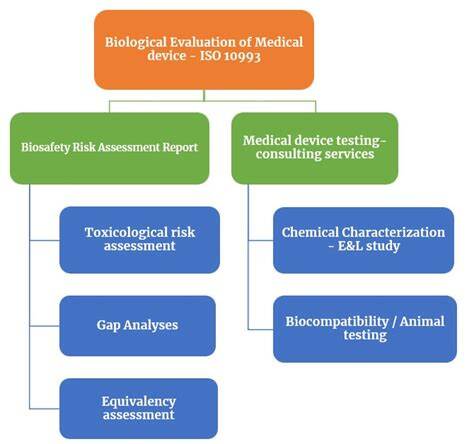
GB/T 16886andISO 10993Standardized Coordination and Unification
(1) Standard Equivalence Relationship
GB/T 16886This is the Chinese national standard for biological evaluation of medical devices, along withISO 10993The international standards maintain full consistency. Both are equally applicable in biomedical evaluation of medical devices, covering the entire workflow—from material characterization and risk assessment to test design, experimental execution, data analysis, and report writing.
(II) Version Updates and Validity
Based on the available information,GB/T 16886Most current versions are2022Version {0} and later, valid until2025year, andISO 10993Some versions are also updated regularly. For example,GB/T 16886Evaluation and Testing in the Risk Management Process2022Year,ISO 10993The latest version of "General Principles for Biosafety Assessment" is2025years. This version update mechanism ensures that Chinese standards remain synchronized with international standards.
(3) Inspection Scope Requirements
Notably,NMPARequirements for biocompatibility testing may be more extensive than those of U.S. or EU regulators and often include broader assessments such as subchronic toxicity. Biocompatibility test reports must be conducted by a facility that is compliant withGLPIssued by a laboratory compliant with Good Laboratory Practice (GLP) standards for non-clinical drug studies, intended for medical devices.NMPARegister. This requirement ensures the professionalism and reliability of test reports.
Latest Guidelines and Trends in Biocompatibility Testing
(I) Strengthening Risk Assessment Mindset
Recent biological evaluation guidelines emphasize that risk assessment is central to the evaluation process.ISO 10993-1(GB/T 16886.1) serves as the overarching principle, requiring risk assessment based on the intended use of medical devices, contact sites, and duration of contact, rather than mechanically executing all test items. This shift in approach encourages companies to incorporate biological evaluation early in the R&D phase, enhancing both the scientific rigor and cost-effectiveness of the evaluation process.
(II) Chemical Characterization and Toxicological Assessment
The latest testing requirements place greater emphasis on chemical characterization and toxicological assessment. ThroughTTCThreshold of Toxicological Concern (TTC) approach andToxtreeThe software performs rapid assessments to establish acceptable limits for compounds, reducing the need for unnecessary animal testing. For products such as process components and drug delivery devices that may leach additives, extractables studies are required to evaluate compatibility and ensure product safety.
(3) Full Lifecycle Management
Biocompatibility evaluation now spans the entire product lifecycle—from raw material selection and design development to regulatory submission and post-market surveillance. Every stage requires integrated biocompatibility management. This lifecycle approach mandates that companies establish comprehensive biocompatibility documentation to ensure safety traceability across all usage phases.
(IV) Digital Service Capability Building
The National Medical Products Administration is actively advancing digital services for medical device review and inspection. Multiple technical review and inspection agencies, including the Yangtze River Delta Branch and the Greater Bay Area Branch, are currently collaborating withNMPAUpgrading the dedicated line integration and electronic declaration system will significantly enhance review efficiency and service quality, providing robust technical support for standardizing biocompatibility testing.
Conclusion
The establishment of a policy support system for biocompatibility testing of medical devices is the essential path to high-quality development of China's medical device industry. ThroughGB/T 16886andISO 10993Unification of the standard system,NMPAand the improvement of policy frameworks for relevant institutions, China has established a scientific, standardized, and efficient biocompatibility testing support system. This system not only ensures the safety of medical device products but also provides strong support for industry innovation and development.