
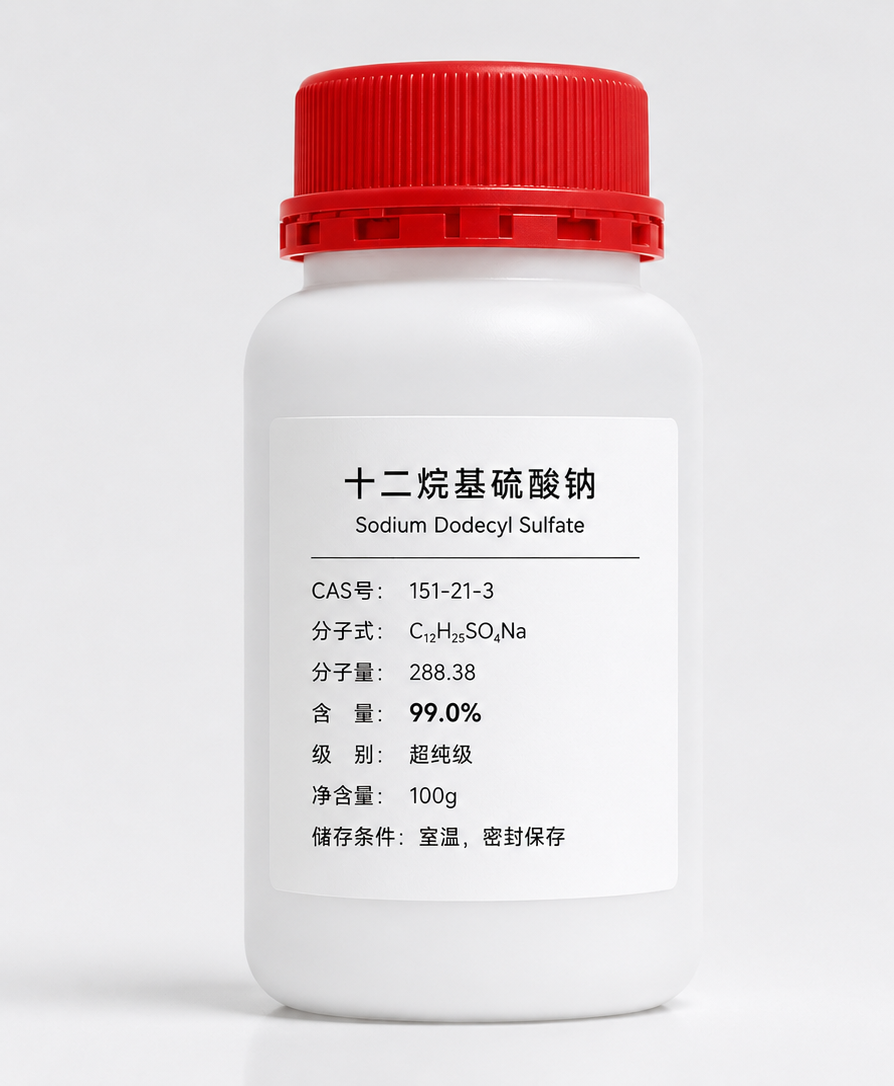
Sodium Lauryl Sulfate
Sodium dodecyl sulfate (SDS), also known as sodium lauryl sulfate, is an anionic surfactant widely used in scientific applications, particularly in molecular biology, biochemistry, and cell biology research. Its effectiveness stems from its amphiphilic nature, which enables it to interact with both hydrophobic and hydrophilic molecules.
PA1998
Perfumer
100g
China
In Stock
On Sale
Share to
Sodium dodecyl sulfate (SDS), also known as sodium lauryl sulfate, is an anionic surfactant widely used in scientific applications, particularly in molecular biology, biochemistry, and cell biology research. Its efficacy stems from its amphipathic nature, which allows it to interact with both hydrophobic and hydrophilic molecules. SDS is a versatile detergent that solubilizes and denatures proteins, making it a fundamental tool for protein extraction and purification experiments. In SDS-PAGE electrophoresis, SDS aids in separating proteins by molecular weight by disrupting their structures.
Beyond protein analysis, SDS is used for electrophoretic separation of lipids, enabling researchers to study and characterize these critical cellular components. Additionally, SDS is employed in various hybridization and molecular biology techniques, underscoring its versatility across diverse research fields. Its efficacy under both ionic and non-ionic conditions further expands its utility, making it suitable for a wide range of experimental environments and requirements. By binding to polypeptide chains and imparting a negative charge, SDS denatures proteins, effectively eliminating the influence of protein shape on gel separation and ensuring accurate determination of protein size.
Related Downloads
No download materials available
Recommended Related Products
Need product inquiries or a discount quote?
Our expert team will provide you with detailed product information and customized solutions.